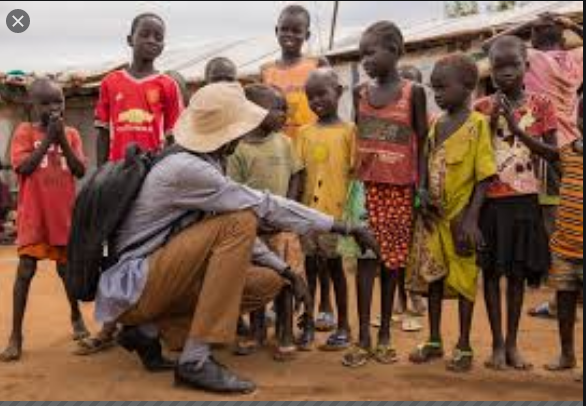
Is humanitarian work a Calling or a profession?
When we take up humanitarian work are we ready to do sacrifice or do we focus on other motivators eg financial rewards ( monetary)?
In my personal opinion, I think humanitarian work is more of a calling than a profession. In many more than once occasion you are called to go beyond the call of duty to deliver on your work.
In many of the emergencies, the risk is so high and a times its life threatening that many staff will question whether it’s worth the risk. As we would say ‘separating the chaff from the wheat’, this is the time when many are tested on whether they have gone beyond the call of duty or are they ready to call it quits, back off or retreat.
When the going gets tough many people will weigh between the calling which is a sacrifice and other motivators including financial rewards.
Some of the dangers testing humanitarian staff every day includes, wars, hostile climate/weather, lack of basic necessities, complex logistics, poor infrastructure, landmines and other UIEDs (unexploded improvised Explosives Devices), even sometimes hostile beneficiaries and stakeholders can push someone to the edge. In all those situations, how do you maintain your cool? What keeps you going? What wakes you up every day, to face another day? Do we say the lives you touch? Is it the paycheck? Is it the impact you create on the community? Is it the status that humanitarian work carries in the society?
I cannot give all the instances where I or other colleagues have been tested by situations strong enough to decide whether they will call it off or they have reached a breaking point. Even those who might say that they have a calling to serve, they too do suffer many times unfathomed degree of stress which also test their resilience. Many staff stressed and some get into depressions and might not be able to access help and thus resort to other means to manage their stress which is mostly drinking or other social vices.
Locations with volatile security always call for organizations to impose curfew on staff movement. These kind of curfew do affect staff psychological and mentally as well. Such curfews will demand that staff respond to roll calls periodically to project that they are respecting the curfews. Movement of staff is restricted and social life is brought to nil. Inbreeding for relationship is the norm and this may roll over to affect professional lives.
Empathize but don’t sympathize, it drains emotionally.
Gilbert peters Ngetich
 Humanitarian, relief and migration